

Flower care
Once you've received your beautiful new flowers, you need to make sure you can care for them correctly. All flowers need different types of care, including light, temperature, water, and humidity. While one flower might thrive in a dark, cool environment, others need plenty of natural light and water. Care for your flowers the right way, and they will blossom and keep you company for a long time.
Roses
Roses come in different varieties. Therefore, their characteristics also vary greatly depending on the type of flower. While many of us are familiar with traditional red roses, others include, for example, white, pink, dark mauve, yellow, and many other colors in between. In fact, some roses can even have two- or three-colored petals.
All roses have soft, smooth petals that are often double. This means a rose can have several sets of petals. The petals can have different shapes depending on the variety. You can find pointed or round petals, for example. Some roses may have only a few petals, while others have more. Roses are also known for their thorns, so be careful with them.

How to care for roses
Roses require regular watering. The general rule for roses is that they should get approximately 2 inches per week. Watering them deeply is better than frequent, shallow waterings.
If you have a rose bush or a rose garden, they require constant feeding and the use of fertilizers. Roses in a vase should also receive a boost, for example, powders that can be mixed with water. For rose gardens, a fertilizer with nitrogen, phosphorus, and potassium is a good option. In spring, one tablespoon of Epsom salt (magnesium sulfate) dissolved in a gallon of water will promote strong stems. To remove old or spoiled parts, you should prune your roses in the spring. The best season to do this is early spring. Pruning in winter, on the other hand, can harm your roses if they are outdoors.
Orchids
Orchids have about 880 genera and over 22,000 species worldwide. It's no wonder orchids are admired around the world. While you can buy orchids anywhere, most are found in the tropics and love the tropical climate.
Orchids have a durable structure, and their white, blue, or magenta hues contribute to their beauty. One of the most well-known orchids is the Phalaenopsis orchid, which has a short body and its roots are covered with broad, large leaves. Orchids bloom at least twice a year and blossom for up to 12 weeks. If you take good care of your orchids, this can happen even 3 or 4 times a year.

Caring for orchids
Orchids prefer to remain in indirect sunlight, as too much sun will cause their flowers to wilt. Remember that orchids do not bloom without enough sunlight: the best situation is with semi-filtered light that gently touches the leaves, without heating them.
While orchids are tropical plants, they do not do well in warm environments. The best temperature is a minimum of 18 degrees Celsius and a maximum of 29 degrees Celsius. The humidity requirement for orchids is at least 50% humidity during the day and 70% during the night. Proper watering is vital for orchids. Too much water will damage them. Ideally, you should water them once a week or divide that same amount of water into two days a week.
Gerbera Daisies
Gerbera daisies are colorful and bright flowers. They are often planted in gardens and pots. Gerbera daisies are native to South Africa and members of the aster family. In fact, they are also related to sunflowers and marigolds. The gerbera was named after the 18th-century German naturalist, Traugott Gerbera.
Gerbera daisies have long-lasting flowers about 3-4 inches across. They come in many shades of different colors: yellow, white, pink, orange, red, salmon, lavender, and more. The flowers are attached to a leafless stem, which rises about 6 inches above the plant's foliage. They bloom from late spring to fall in the garden, and flowering produces long-lasting cut flowers. These flowers usually grow 6 to 18 inches tall.

How to care for gerbera daisies
For growing gerbera daisies, good drainage in their soil is important, as excessive moisture can lead to root rot and various diseases. If your soil does not provide good drainage, it is recommended to consider growing gerbera daisies in pots. They also prefer soil enriched with compost. Soil moisture needs are moderate once rooted. However, you should make sure that gerbera daisies receive plenty of water when you plant them.
Plant your gerbera daisies in spring and space them 12 to 18 inches apart. Remember to cover the plants with a 2-3 inch layer of organic matter. This could be, for example, pine straw or pine bark. It retains soil moisture and reduces weed growth.
Sunflowers
Sunflowers are found mainly in North and South America and have almost 70 species. Some species, in fact, are grown as ornamentals for their immaculate size and buds. In addition, sunflower seeds are edible, which makes them even more attractive to many. Also, the Jerusalem artichoke is grown for its edible underground tubers.
The common sunflower (or in other words, H. annuus) is an annual herb. It has a rough, hairy stem that can be up to 1-5 meters long and spiraled. Sunflower heads can be between 7 and 15 centimeters wide. The disk flowers are brown, yellow, or purple. The petals are yellow.

How to care for sunflowers
When the plant is still small, water around the root zone about 3-4 inches from the plant. If you need to protect the plant, you can place snail bait around the stem. Once the sunflower plant is established, you can water it deeply and infrequently to encourage the roots to dig deeper. Generally, water once a week with several gallons (or liters) unless it is exceptionally wet or dry.
The sunflower should be fed sparingly, as excessive fertilization can cause the stems to break and fall. If necessary, add diluted fertilizer to the water. But remember to avoid placing fertilizer near the base of the plant, as it can create a circle space around the plant. Tall plants like sunflowers need help from a support to avoid leaning and breaking. Use a stick or cane to support it.
Lilies
Lilies are loved by everyone. There are about 80-100 species of lilies and they are native to temperate areas of the Northern Hemisphere. Most lilies are ornamental plants. In addition, lilies have been extensively hybridized.
Many lilies are very fragrant and are seen in many different colors. You can find single-colored or multi-colored lilies. The plants of most species are between 30 and 120 centimeters tall (between 1 and 4 feet). Some, however, can grow up to 2.5 meters (or 8 feet).

How to care for lilies
When lilies are actively growing, they need to be watered frequently (especially if rainfall is scarce). The area around the lilies should be moist but not wet. In addition, it is recommended to add liquid fertilizer high in potassium every 2 weeks from planting until 6 weeks after flowering. Every spring apply a thin layer of compost and 2 inches of mulch.
Lilies bloom once per season. However, you can remove faded flowers so that the plant does not waste energy on seed production. After flowering, you can remove the stem, but do not remove the leaves until they die. The leaves provide food to the bulb for next season's bloom, so avoid removing the leaves until they turn brown.
Also, before winter, add 4 to 6 inches of mulch to delay the freezing of the soil and give the roots a chance to continue growing.
Daisies
Daisies are known to everyone. Some of the distinctive features of daisies are, for example, a central disk with a button shape of microscopic flowers. They are surrounded by a ring of beautiful ray-like petals. The central disk can be flat, convex, or even concave, depending on the plant. Colors can range from yellow to black, brown, or purple. Petal colors vary from white to cream, yellow, orange, crimson, red, purple, or pink.

Caring for daisies
To make daisies bloom better, they should grow in full sun. The soil should be moderately fertile: if it's too rich, you'll get more foliage than flowers. In addition, the soil should be moist and well-drained. Be sure to loosen the soil to a depth of 12 to 15 inches and mix in approximately 2 to 4 inches of compost.
Remember to space plants 1 to 2 feet apart and dig a hole twice the diameter of the container. When placing it in the hole, make sure the top of the root ball is level with the soil surface. Water the plant thoroughly and add support to taller plants if necessary.
Daisies generally tolerate dry periods, so water them only if there has been no rain. Also, add compost during spring to prevent weeds.
Carnations
There are many different species of carnations, for example, Dianthus caryophyllus, which has 5 petals and its color varies from pink to purple. When you grow carnations in gardens, they grow to about 6-9 cm in diameter. Carnation petals are typically clawed or toothed. Carnations bloom simply or in clusters.

How to care for carnations?
Caring for carnations is very simple and, in fact, they are one of the easiest flowers to care for. They should get 4-6 hours of sunlight every day and be watered 2-3 times a week. If the foliage or petals start to turn yellow, you have overwatered them. Also, remember the following:
- To promote reblooming, remove dead flowers and leaves.
- You should not mulch them, as it prevents adequate air circulation.
- They are generally not affected by pests, so there is no need to use pesticides.
- Tall species of carnations may need staking or support.
Cactus and succulents
When talking about succulents, it refers to a category of plants (including cacti) that have thick, fleshy leaves. These leaves store water very well and thus ensure the survival of these plants in arid conditions.
In fact, the cactus family has about 2000 species and, with one exception, they are native to America. They range from the Arctic Circle to the mountains of Chile. However, they are most common in the southwestern United States and Mexico.
The shapes and sizes of cacti and succulents vary greatly. You can find small, large, tall, and all kinds of variety.
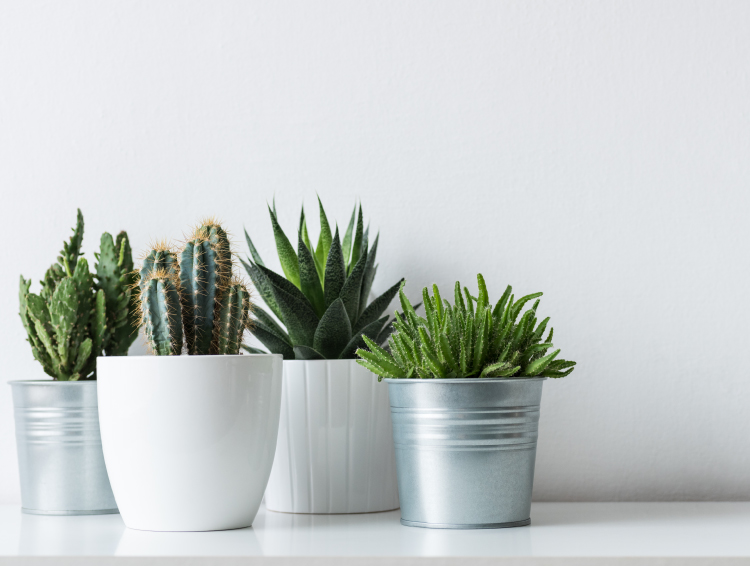
How to care for cacti and succulents?
Caring for cacti and succulents is very easy, as they don't require much. That's why they are ideal for apartments, for example, or for someone who travels a lot. Just make sure to follow these instructions:
- Make sure they get plenty of bright light. Artificial lighting can compensate for the lack of natural light. Succulents should receive 14 to 16 hours of light per day.
- In winter, when there is very little light, water your succulents just enough to prevent them from shrinking and wilting.
- When watering your plants, do so thoroughly. Water should flow through the drainage holes: discard excess water after a few minutes.
- Always allow the soil to dry completely between waterings.
- Cacti and succulents have fairly low nutrient requirements. They only need fertilizer once or twice a year (late spring or summer).
You can order these beautiful flowers and plants from our wide selection at LolaFlora and always follow this guide to extend the life of your bouquets and arrangements. We will be waiting to fulfill your orders and any requests you may have. Enjoy your flowers!